
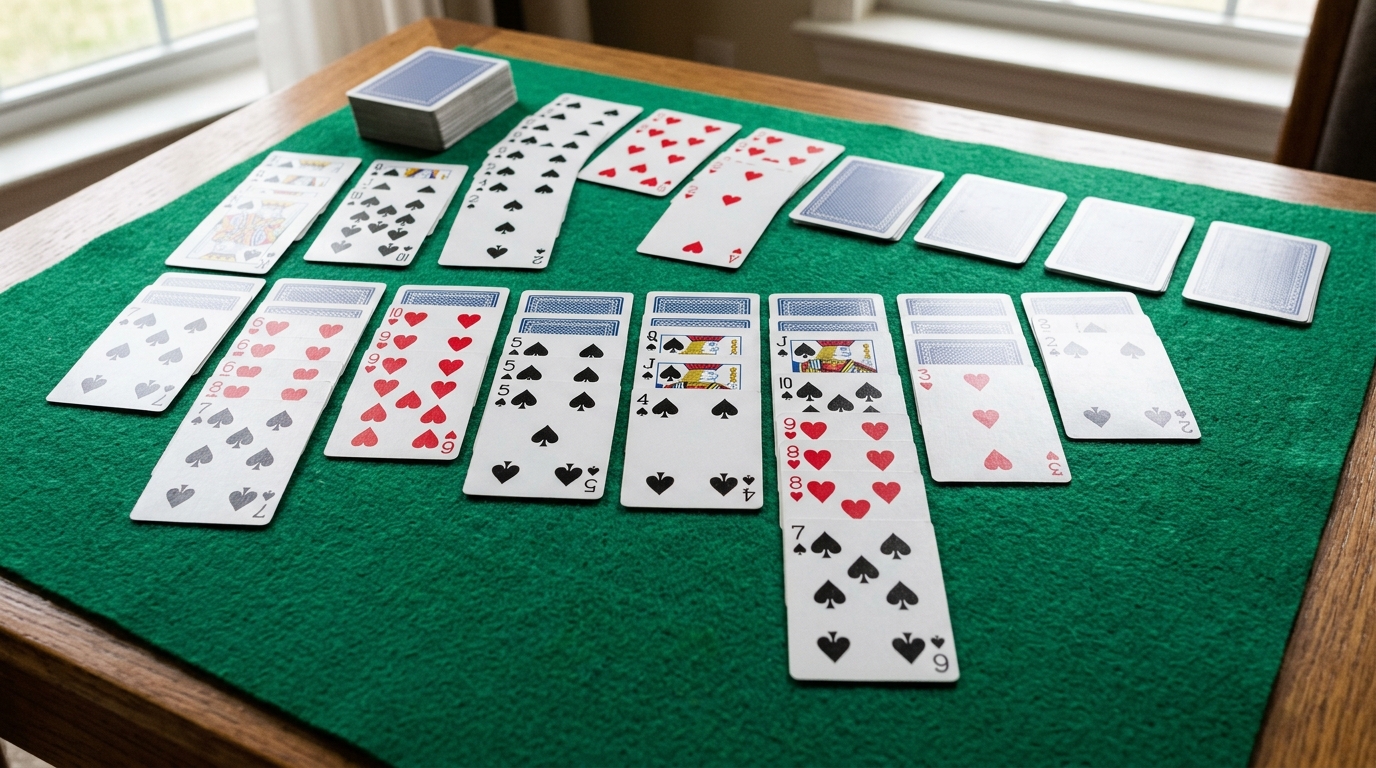
The final card makes a Spider run look complete, but the strategic question is what the empty space will do after the cards vanish. Spider Solitaire same suit timing gives that moment a name, but the useful part is the habit behind it. The aim is not to make every move look clever. It is to make the next move easier to explain.
Why Spider Solitaire same suit timing matters on an ordinary puzzle
Spider Solitaire same suit timing matters because a full King-to-Ace run is removed under standard rules. That removal can expose a card, clear a column, or create room for a useful transfer. The timing decision happens before the final link, when the partial run may still be holding a fragile section together. A player does not need a special setup to use this idea. It works during a short browser session, on a printed page, or in the middle of a game when attention is starting to drift.
Spider Solitaire is a game of access under pressure. A card that is visible is not automatically useful, and a tidy stack is not automatically mobile. The strongest move often changes what you will be able to see two turns later. Empty columns, same-suit runs, hidden cards, and stock deals all compete for the same limited space. Treat each move as an exchange: what information or mobility are you buying, and what structure are you giving up? That question keeps the board readable when the columns start to crowd.
The wider background is worth keeping nearby. Bicycle Spider Solitaire rules offers useful context for this puzzle family, while Spider Palace rules guide gives a second view of its rules or history. The sources differ in purpose, but both support the same practical lesson: a clear structure gives the player something reliable to inspect.
How to use Spider Solitaire same suit timing without forcing it
Inspect the column below the run, the hidden card that may appear, and the sequence that could use the cleared lane. If completion improves access and space, make the final connection. If it only makes the tableau look tidy, compare one setup move first. Start with a legal move and let the evidence narrow the field. If the position does not improve, stop. A good technique is a filter, not a command to keep pushing the same idea after the board has moved on.
A short routine for the next game
Use reveal, space, mobility as three checks. If the final card wins two checks, finish. If it wins none, keep the relationship visible and improve the surrounding tableau before returning.
- Confirm the run is complete and one suit.
- Check the card or space it will expose.
- Ask what can move after removal.
- Finish when the new tableau is more flexible.
The mistake that makes this idea feel harder
The trap is completing because the run is visually satisfying. Another mistake is delaying a strong removal while the board remains blocked. Judge the finish by the move after it, not by how neat the column looks now.
What to remember when the board changes
Spider Solitaire same suit timing makes completion a board decision. The cards disappear, but the new shape has to give you somewhere useful to go. That is also why Spider Solitaire same suit timing should stay practical. Use it when it describes the board in front of you, then return to ordinary reading when the evidence changes. A puzzle is allowed to ask a different question on the next move.
If Spider Solitaire same suit timing does not produce a move today, that is useful information too. Leave the position clean, keep the strongest clue visible, and come back after one ordinary move. Techniques become reliable through that small return: notice the signal, test it, record what changed, and stop before the idea turns into a guess. Over time, the pause becomes part of your solving rhythm rather than a sign that the puzzle has defeated you.
Keep the session concrete. Name the clue, make one reversible change, and look again. That is enough for a useful practice round, even when the puzzle is unfinished. A short note about what changed makes the next session easier to start.
For a live session, play more puzzles on spider-solitaire-aarp.com. When you want a related example, browse related posts on this site. You can also try another daily puzzle at Easy Daily Puzzle or find more puzzle guides on Easy Daily Puzzle. Keep the next step simple: play one puzzle, try the routine once, and notice which decision became clearer.
A Spider deal can be paused after one structural improvement. Remember the column that changed and the card that became visible. Returning with that information is more useful than making another move just to keep the board busy.