
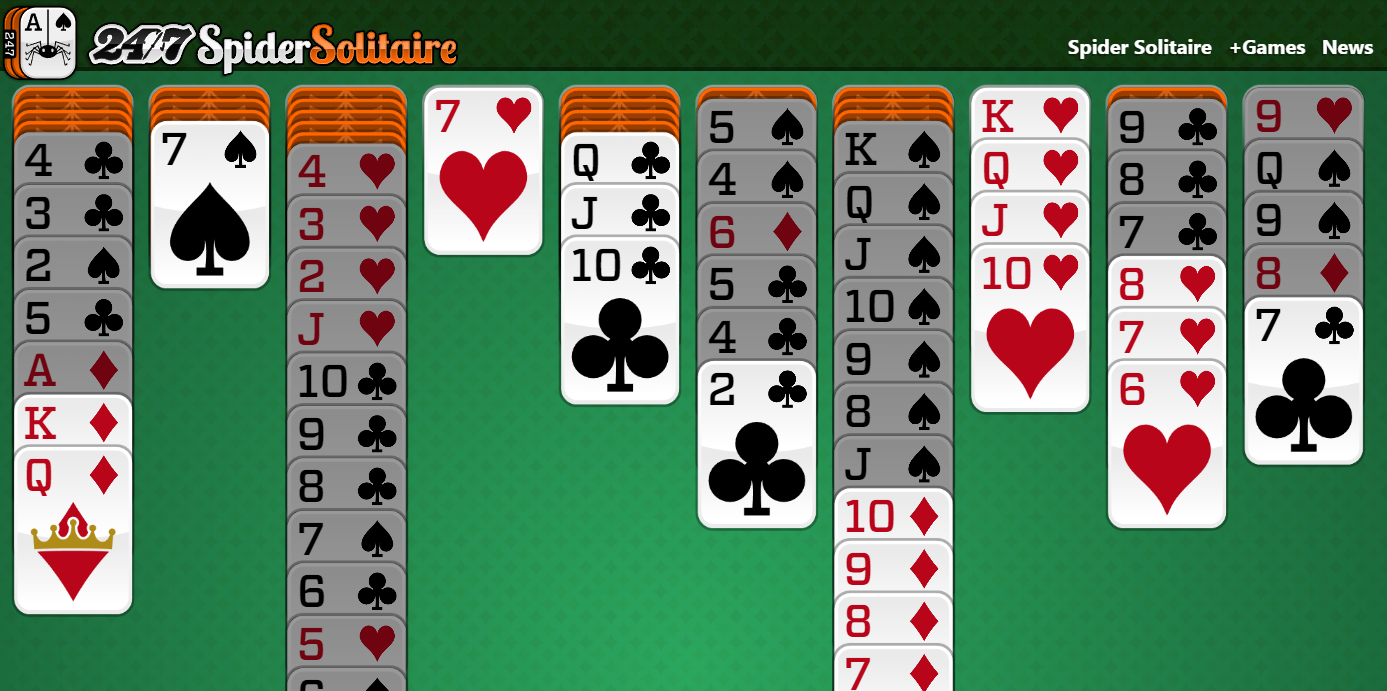

Four Spider Solitaure costumes is a famous challenge game. The goal is to submit articles from the scene to the sequenced suit from King to Ace in order of descent by following special rules. To achieve this, however, we must be skilled, strategic, and fortunate.
Fortunately, this guide is here to help. It explains many strategies that you should apply and provides much counsel to win, even if all hope seems to be lost!
Understanding the Basic Things
The four-shirt spider uses two sets of French cards to play with a total of eight suits. You start the game by creating animations – a line of ten stacks of cards. The first four had six leaves, and the last six had five leaves. The other leaves go to the warehouse, a bunch of leftovers.
You start the game by flipping the top cards on each stake. Then you have some choices:
- Add a card to a card of the same level (i.e. adding two muscles to a stack at the top by three muscles)
- Add a flip card to any card of the next type (e.g. adding two hearts to a stack of three diamonds)
- Deal ten new cards from stock, one for each scene
Spider Solitare’s goal was to create series of cards in order to descend: Kings, Queens, Jack, 10, 8, 7, 6, 5, 4, 2, 1, and Ace on a pile. Once you’ve got one set, you can remove it from the scene, clear the table for many later sequences.
You can create inappropriate strings Followed by 10, 9, 8, 7, 6, 5, 3, 2, 1 diamond. Eventually, however, you have to organize them into a complete suit before removing them from the scene.
When you remove a card from one pile and put it on another pile, you reveal the following card. Turn it back allows you to create the sequences of lower levels, etc.
If you can’t put any cards above any of the other cards in the conference, you can divide the goods. However, the agreement is random, meaning that you can hang any card on the existing stack (even if they are not in order).
Spiders: move tactics
These rules create a very difficult toxin. Winning is very rare because strict rules about where you can place cards.
Fortunately, some strategies increase your ability to win, helping you create clothes and avoid missing opportunities.
Line Order
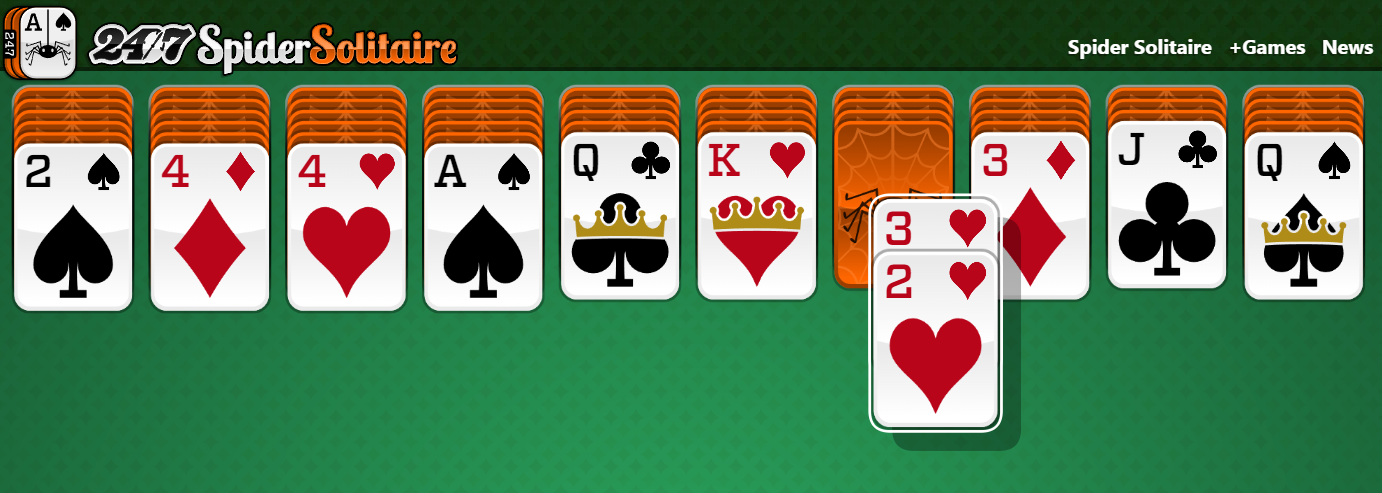
The first strategy is to give priority to building sequences of uniform suits. These give you the ability to complete the winning set and create the blocks you can move at the same time (help you reveal many cards on the board).
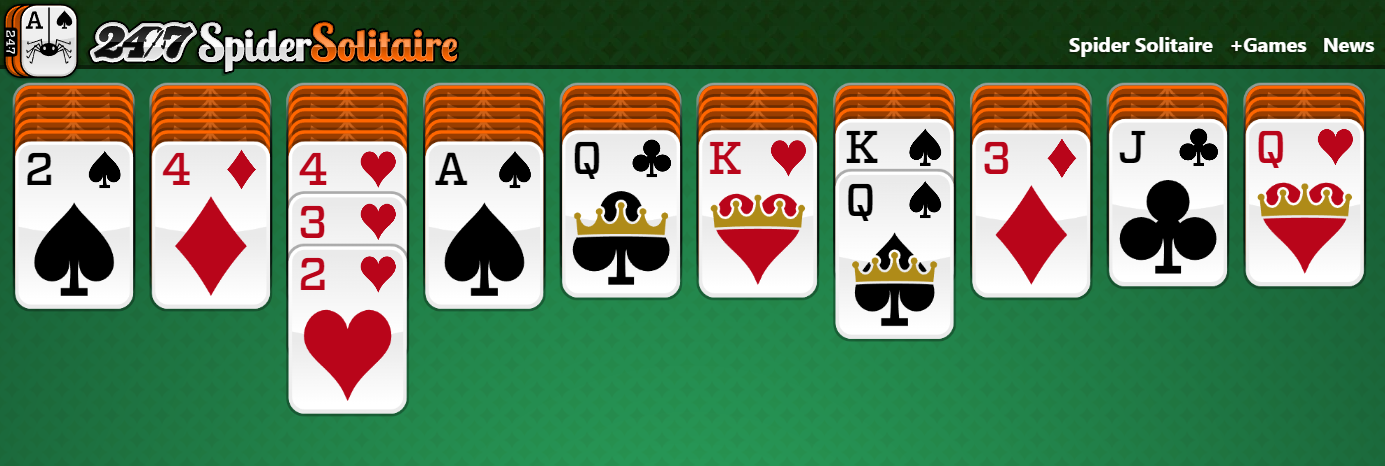
This example shows what the actual strategy is. You can move 2 and 3 hearts together and put them on another pile. Then you can reveal a new card below, in this case, King of Spades.
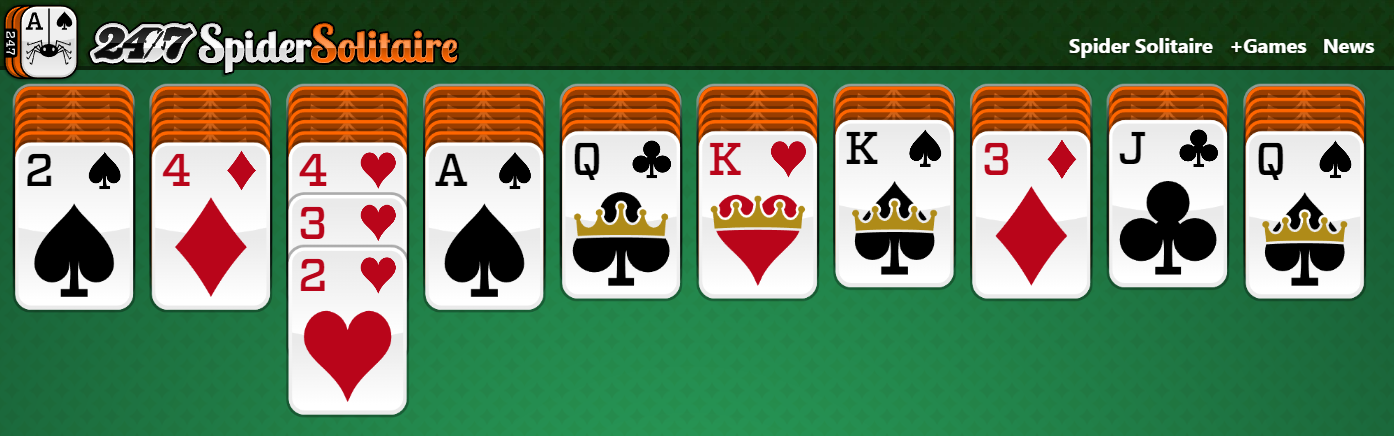
Set tag hidden in animation when possible
You also want to expose the cards hidden in the scene whenever possible. This allows you to finally open a space It gives you more options.
Taking from stocks is another possibility. However, doing so can prevent you from creating clothes and causing you to get into worse situations.
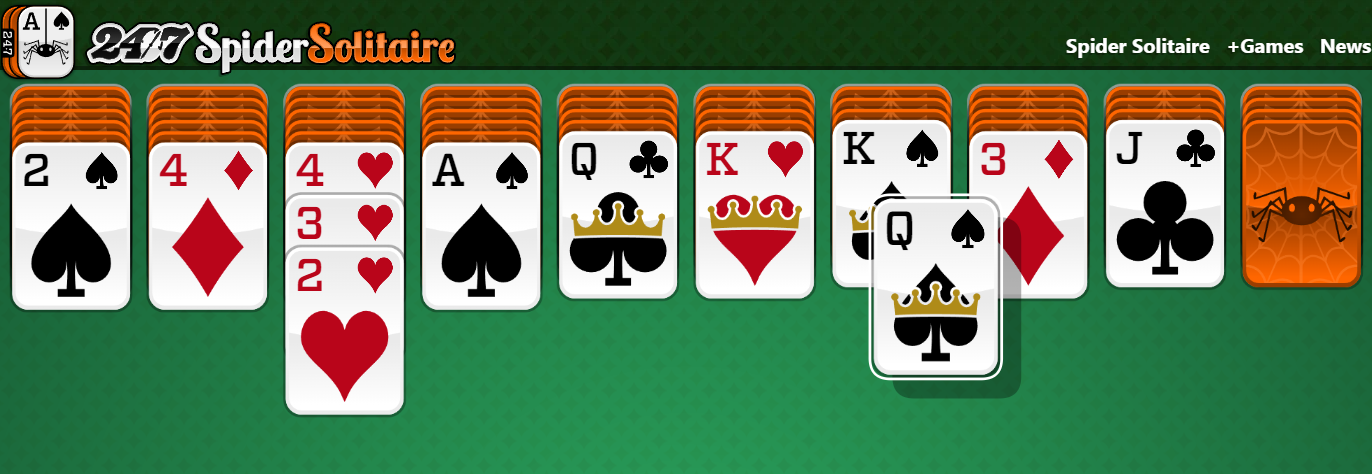
This example shows what happens when we move the Queen of Spade to King of Spade revealed in the final round. This strategy fits the filter and reveals a new card, providing more options, as shown below:
Making the pillows empty soon
Ideally, you want to have empty piles as soon as possible to give you many later choices.
The continued game of the game shows this concept in action. The last matter in the scene now has only nine hearts in it. Remove this card will create spaces for any other tag or series in the same suit, adding to the options.
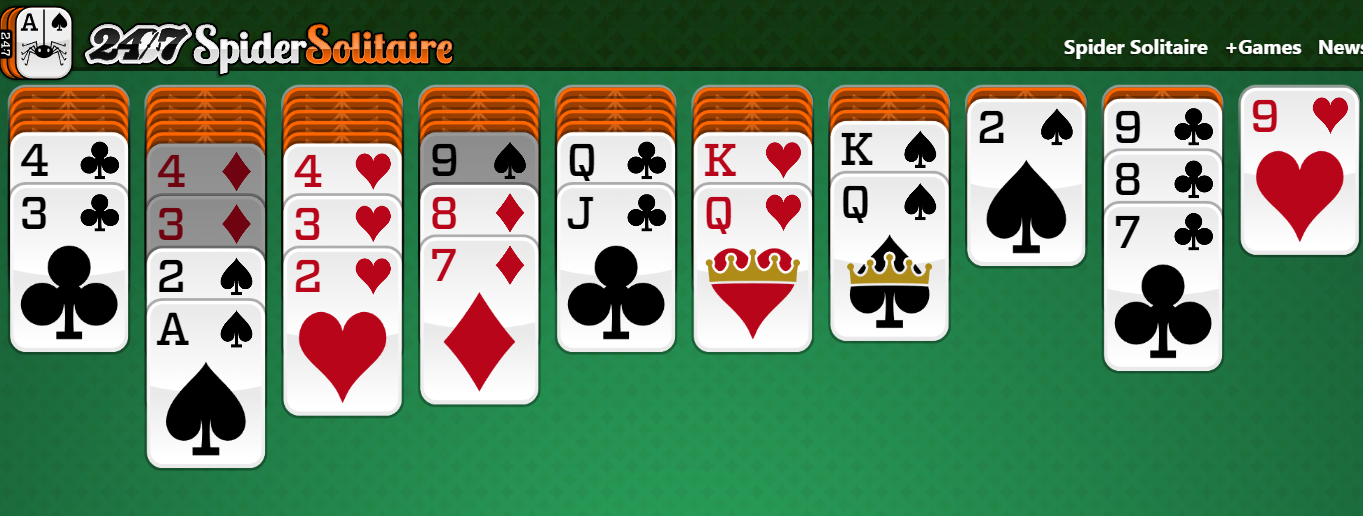
Creating spaces is one of the most difficult aspects of the game but it gives you more options to re-order the cards into appropriate. If you don’t have enough of this, you don’t have room to reorder, force you to deal with stocks.
Focus on Construction with Advanced Tags
Another clue is to build on higher value cards than before, ideally start with kings and go down, (as in the above example). Setting up three or four of these makes it easier to add articles in later order.
If you need to build “out of the suit, start with the highest rank. Lowing would mean you ended up with a quick ace and had little chance of putting it anywhere.
Sort as much as you can before dealing.
Related to the first strategy of the suit, try to do your best before trading. As discussed, additional articles from the stock can create a mess and the game can end up looking impossible to win.
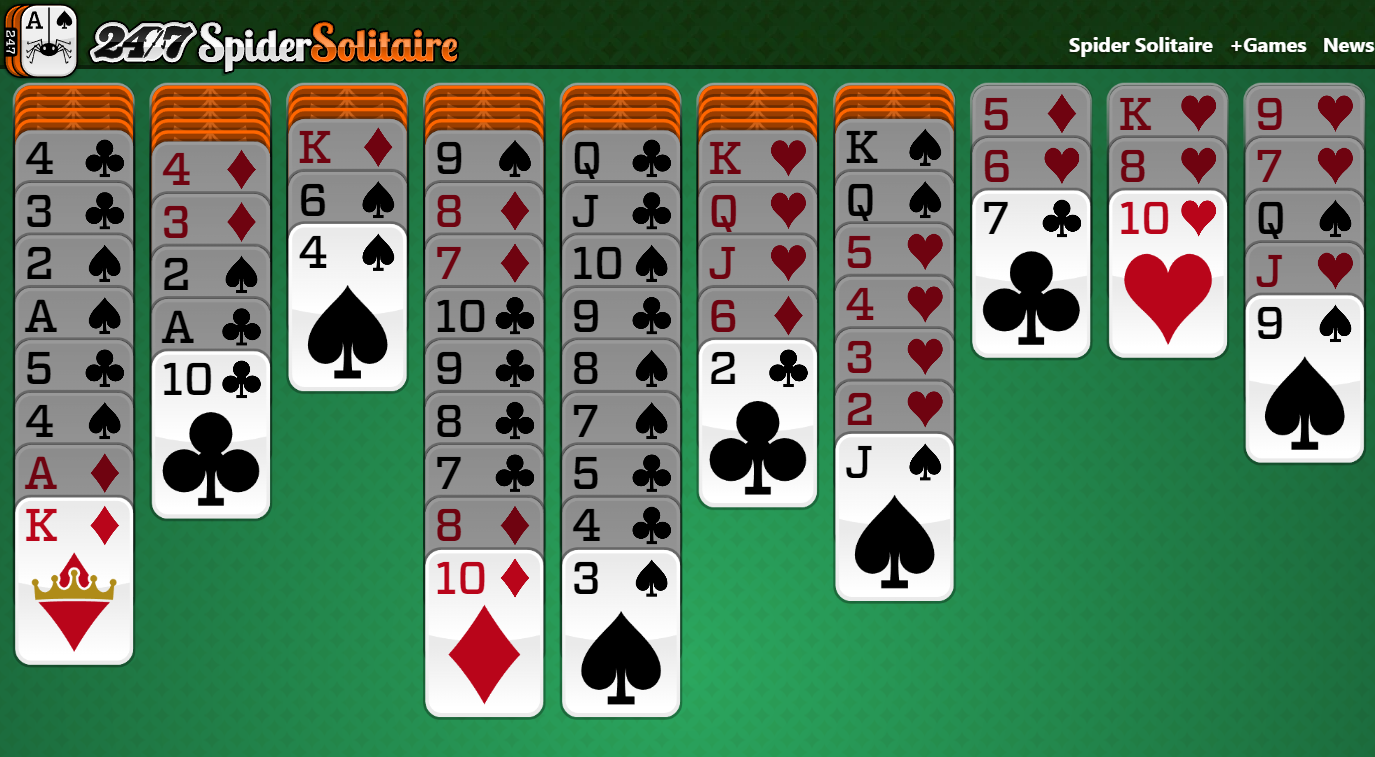
The following example shows what happens when you continue to distribute and skip to create the series of cards, even if you have a reasonable hand. In the end, you will face a difficult situation that you cannot afford to lose your card to win.
Advanced Strategy to Win
As you play the game and explore further, you’ll notice the models and strategies you can use to increase opportunities. These people rely on a more systematic approach to the game and do not make the moves clear if they are better available.
Focus on making clothes in your animation
An advanced method is to weigh probability and focus on making clothes that look like they are in your animation. For example, if you had five hearts and three diamonds in the ten flip cards, it would be more meaningful to focus on these rather than on building other sets. Using extra stacks to store cards can be effective, as long as you don’t bury what you need to finish.
Identifiers of Pregnitive Strings
Another advanced strategy is to avoid exploring the next card at all costs and instead consider which movement sequences are likely to produce the suit. If you’ve got a series of three or four cards, that’s the sign you want to focus more on exploring new cards to create the next component of that sequence. Adding yoke to the bottom can reduce the risk of being stuck and must be drawn.
When you complete a sequence, turn one block to another and find the opportunity to build from there. Combining this strategy with space can increase its effectiveness, allowing you to discover more cards.
Using the First Effective Method
Some players also apply the first effective method. This approach looks further than the next step and assesses impacts that can rise to the whole operation.
At times, the player will add cards to his husband, only because of the opportunity to do so. This method, however, is not always the longest choice because of how it affects future choices. Players can sometimes see their choices limited when simply following a clear order.
Reuse
The last tip is to use the drop button on online versions of the spider game. These allow you to take a step back to assess different options. Some decisions will be dead ends, but other decisions will help you to get closer to making things.
Manage multi-class stacks
The suit stacks are hard to manage because you can’t move cards under the top row. Therefore, even if there is room for chains elsewhere in the convention, you cannot access it until you move the top cards.
The problem is even worse when you have a card in your husband. This requires you to analyze each one, and the scene may never have the opportunity to do so.
To manage multiple pages husbands:
- Use husbands to free temporary cards to complete filters
- Use empty column to separate multiple pages pile
- Goals to analyze down to multipage piles whenever opportunity arrives
- Reject the reduction in the size of the multi-dressed husband
Errors to Avoid
Finally, this is some mistakes to avoid in four spiders.
- Draw from deck immediately instead of creating empty piles first
- Ignore hidden tags in the scene and focus only on drawing from the stock
- Forget the move of the poor to create problems later
- Use empty columns for kings too early when you need space to build more middle sections
- Building multiple pages early without changing actions in one country or two
So you have it: our tips for winning 4-suit Spider Solitare. It’s a challenge, but it’s also addictive and extremely satisfying when you get it.
h3{color:#ffba00}